
Wellness · October 10, 2026
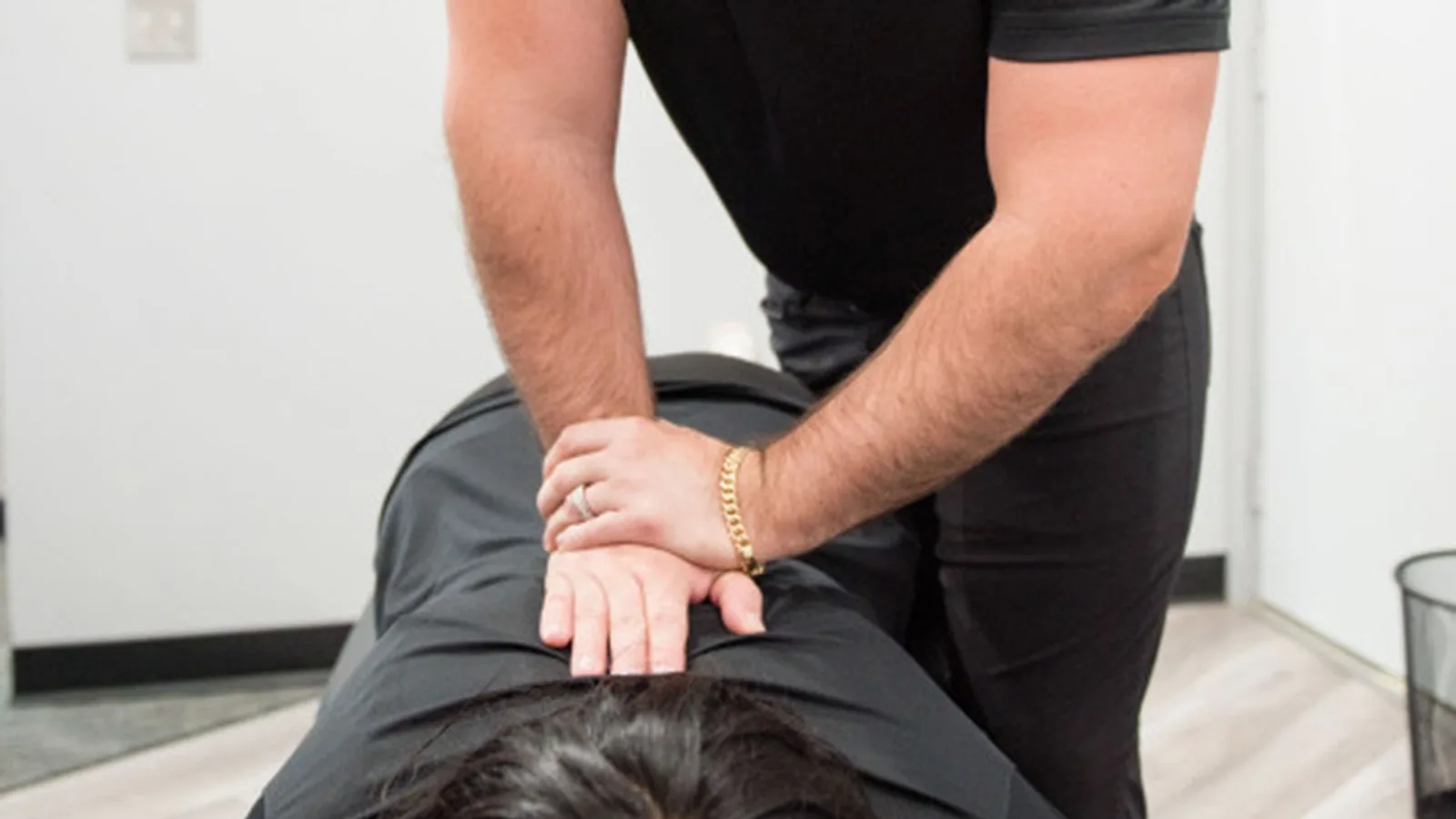
If you've ever experienced a nagging ache in your lower back, sharp pain that shoots down your leg, or numbness and tingling in your arms or hands, there's a real chance a disc bulge could be involved. It's one of the most common spinal issues we see here at Eagle Trace Spine & Sport in Burnsville, MN — and yet it's also one of the most misunderstood. Many people hear the phrase "bulging disc" and immediately picture the worst. They assume surgery is inevitable or that they'll be dealing with pain forever. The good news is that most disc bulges respond very well to conservative, non-invasive care. Understanding what's happening in your spine is the first step toward feeling better.
What Is a Disc Bulge?
A disc bulge occurs when one of the soft, cushion-like discs between your vertebrae extends outward beyond its normal boundary — but without rupturing. Think of it like squeezing a jelly donut from one side: the filling shifts, but the outer casing stays intact. This bulge can press on nearby nerves or spinal structures, causing pain, stiffness, and other symptoms depending on its location in the spine.
What Is a Disc Bulge and How Does It Differ from a Herniation?
Your spine is made up of 24 movable vertebrae, and between each of them sits an intervertebral disc. These discs serve as shock absorbers, helping your spine flex, rotate, and handle the daily demands of movement and load. Each disc has two main layers: a tough outer ring called the annulus fibrosus and a soft, gel-like interior called the nucleus pulposus.
A disc bulge happens when the outer ring weakens or compresses unevenly, causing the disc to extend outward — usually in one direction. The outer ring remains intact, which is what separates a bulge from a herniation. In a herniation (sometimes called a "slipped disc"), the outer ring actually cracks or tears, allowing the inner gel material to leak out. While both conditions can cause similar symptoms, herniations tend to be more severe.
It's also worth noting that not all disc bulges cause pain. Research has shown that many people have imaging findings like disc bulges without experiencing any symptoms at all. This is an important point because it means a positive MRI finding doesn't automatically mean your life is over — context and clinical evaluation matter enormously.
Common Causes of Disc Bulges
Disc bulges don't usually happen overnight. In most cases, they develop gradually over time due to a combination of mechanical stress, lifestyle habits, and natural aging. Here in Burnsville, MN, Dr. Jeff Plaster sees patients from all walks of life dealing with disc issues — from desk workers hunched over computers all day to active individuals who push their bodies hard on the weekends.
One of the most significant contributors is repetitive poor posture. When you sit or stand with a forward head posture or rounded lower back for extended periods, you place uneven pressure on certain parts of your discs. Over months and years, this chronic, asymmetric loading can cause the disc to shift out of its normal position.
Sudden trauma — like a car accident, a heavy lift with poor form, or a fall — can also cause a disc to bulge by rapidly compressing or twisting the spine. Age-related degeneration plays a role as well. As we get older, our discs naturally lose hydration and elasticity, making them more susceptible to bulging. Other contributing factors include excess body weight, a sedentary lifestyle, and occupations that involve heavy lifting, bending, or prolonged sitting.
Signs and Symptoms to Watch For
The symptoms of a disc bulge depend heavily on where in the spine it's located and whether it's pressing on a nerve. Bulges in the lumbar spine (lower back) are the most common, and they often cause localized lower back pain, muscle spasms, and stiffness. When a lumbar disc bulge presses on the sciatic nerve, it can trigger a condition called sciatica — a radiating pain that travels from the lower back down through the buttock and into one or both legs.
Cervical disc bulges (in the neck) can cause neck pain, shoulder tension, and pain or tingling that radiates down the arm into the hand and fingers. Some people describe this as an electric shock sensation or a persistent "pins and needles" feeling. In the thoracic spine (mid-back), disc bulges are less common but can cause rib pain or a band-like sensation around the chest.
In more serious cases — especially when a disc bulge significantly compresses the spinal cord — symptoms can include loss of bladder or bowel control, severe weakness in the limbs, or loss of coordination. These symptoms require immediate medical attention and are not typical of a standard disc bulge. If you're experiencing any of these, seek emergency care right away.
How Chiropractic Care Can Help
Chiropractic care is widely recognized as an effective, non-surgical, drug-free approach for managing disc bulges and their related symptoms. Organizations like the American College of Physicians (ACP) and the National Center for Complementary and Integrative Health (NCCIH) have acknowledged spinal manipulation and other conservative therapies as reasonable first-line treatments for spinal pain conditions.
At Eagle Trace Spine & Sport in Burnsville, MN, Dr. Jeff Plaster takes a thorough, individualized approach to evaluating each patient. Care begins with a detailed health history and a physical examination to understand exactly what's going on with your spine. Depending on the findings, imaging like X-rays may be recommended if appropriate.
Chiropractic adjustments — also known as spinal manipulation — work by restoring proper movement and alignment to the vertebral joints. When joints become restricted or misaligned, they can alter how load is distributed across a disc and aggravate surrounding nerves and muscles. By addressing those joint restrictions, chiropractic care can help reduce pressure on the affected disc and improve the overall mechanical environment of the spine.
Beyond adjustments, care at Eagle Trace Spine & Sport may include soft tissue therapies, rehabilitative exercises, postural correction, and movement coaching. The goal isn't just to reduce your pain — it's to address the underlying biomechanical factors that contributed to the disc bulge in the first place, so you can stay healthy and active long-term.
Practical Tips for Managing a Disc Bulge at Home
While professional care is important, there are things you can do at home to support your recovery and prevent further irritation. Dr. Jeff Plaster routinely coaches patients at Eagle Trace Spine & Sport on these self-care habits because small daily changes can make a meaningful difference over time.
Staying gently active is one of the most important things you can do. Bed rest might feel appealing when you're in pain, but prolonged inactivity tends to make disc-related symptoms worse. Low-impact movement like walking, swimming, or gentle stretching keeps blood flowing to the spinal tissues and helps maintain muscle support around the spine.
Pay attention to your posture during daily activities. Whether you're sitting at a desk, driving, or lifting objects, maintaining a neutral spine — where the natural curves of your back are supported — reduces unnecessary stress on your discs. If you work at a desk, make sure your chair supports your lower back, your feet are flat on the floor, and your screen is at eye level to avoid forward head posture.
Sleep position also matters. Sleeping on your back with a pillow under your knees, or on your side with a pillow between your knees, can help maintain spinal alignment and reduce disc pressure overnight. Avoid sleeping on your stomach if possible, as this position forces the neck into rotation and compresses the lumbar spine.
When to See a Chiropractor
Many people wonder how long they should wait before seeking professional help for back or neck pain. Generally speaking, if your pain is moderate, getting worse, or has persisted for more than a few days without improvement, it's worth getting evaluated. A disc bulge that goes unaddressed can sometimes progress, and the sooner you understand what's going on, the sooner you can start moving in the right direction.
You should consider seeing Dr. Jeff Plaster at Eagle Trace Spine & Sport if you're experiencing persistent back or neck pain, radiating pain into your arms or legs, numbness or tingling in your extremities, stiffness that limits your daily activities, or pain that wakes you up at night. These are signs that something mechanical is going on that deserves a professional evaluation.
However, there are certain red flags that require immediate medical attention rather than chiropractic care. These include loss of bladder or bowel control, sudden severe weakness in the arms or legs, high fever combined with back pain, or a recent significant trauma. If any of these apply to you, please go to the emergency room or contact your primary care physician right away.
Disc Bulge vs. Disc Herniation: Key Differences
Feature | Disc Bulge | Disc Herniation |
|---|---|---|
Outer disc ring (annulus) | Intact but weakened | Cracked or torn |
Inner material (nucleus) | Stays inside the disc | May leak outside the disc |
Severity | Generally less severe | Often more severe |
Common symptoms | Local pain, mild nerve irritation | Radiating pain, nerve compression |
Response to conservative care | Often responds well | Frequently responds well; occasionally requires medical intervention |
Imaging appearance | Disc extends symmetrically or broadly | Focal protrusion or extrusion visible |
Myths vs. Facts About Disc Bulges
Myth: A disc bulge always means you need surgery.
Fact: The vast majority of disc bulges are managed successfully with conservative, non-surgical care. Surgery is typically considered only when conservative options have been exhausted and there are significant neurological deficits that aren't improving. Many patients at Eagle Trace Spine & Sport in Burnsville have found meaningful relief without ever needing an operation.
Myth: If your MRI shows a disc bulge, you'll always be in pain.
Fact: Imaging findings do not always correlate with pain levels. Research has consistently found disc bulges and other spinal changes in people who have no symptoms at all. A bulge on an MRI tells us about anatomy — it doesn't predict your future pain or function. Clinical assessment by a qualified provider like Dr. Jeff Plaster gives you a far more accurate picture of what's really going on.
Myth: You should avoid all activity and rest completely.
Fact: Staying reasonably active is one of the most evidence-supported recommendations for disc-related pain. Gentle movement promotes healing, maintains muscle strength, and prevents the stiffness and deconditioning that can make recovery harder. Complete bed rest is no longer recommended as a primary treatment for most spinal conditions.
Myth: A disc bulge will always get worse over time.
Fact: Many disc bulges actually improve on their own or with appropriate conservative treatment. The disc can rehydrate, surrounding inflammation can resolve, and the body has a remarkable capacity to adapt. With the right care and lifestyle habits, many people return to full, pain-free activity.
Myth: Chiropractic adjustments are dangerous for disc bulges.
Fact: When performed by a trained and licensed chiropractor, spinal manipulation has a well-established safety profile. Dr. Jeff Plaster conducts a thorough examination before any treatment to ensure the approach is appropriate for your specific condition. Chiropractic care for disc bulges is considered a conservative and evidence-informed option by multiple major healthcare guidelines.
Final Thoughts from Eagle Trace Spine & Sport
A disc bulge can feel scary, especially when pain is affecting your ability to work, sleep, or enjoy the activities you love. But here's what we want you to know: you have options, and you don't have to navigate this alone. The team at Eagle Trace Spine & Sport in Burnsville, MN is here to help you understand what's happening in your body and build a care plan that makes sense for your life.
Dr. Jeff Plaster has worked with patients across the Burnsville community dealing with everything from mild disc irritation to more complex spinal conditions. The approach at Eagle Trace Spine & Sport is always patient-centered, thorough, and focused on long-term results — not just short-term relief. Whether you're a lifelong athlete, a busy parent, or someone who's just tired of living with nagging back pain, there's a path forward.
If you've been wondering whether chiropractic care is right for your disc bulge, the best first step is a conversation and an evaluation. Understanding your spine is empowering — and that's exactly what we're here to help you do.
Frequently Asked Questions
Can a disc bulge heal on its own?
In many cases, yes. The body has a natural capacity to reduce inflammation and allow disc tissue to normalize over time. Conservative care — including chiropractic treatment, movement, and postural corrections — can support and accelerate this process significantly.
How long does it take to recover from a disc bulge?
Recovery timelines vary depending on the severity of the bulge, how long the condition has been present, and how consistently a person follows their care plan. Some patients notice improvement within a few weeks; others with more complex presentations may need several months of consistent care.
Is it safe to exercise with a disc bulge?
In most cases, yes — with appropriate guidance. Low-impact activities like walking and swimming are generally well-tolerated. It's important to avoid high-impact or heavy loading activities during the acute phase, and to work with a provider like Dr. Jeff Plaster to understand which movements are safe for your specific situation.
What's the difference between a disc bulge and sciatica?
Sciatica is a symptom — specifically, pain that radiates along the path of the sciatic nerve from the lower back through the buttock and leg. A disc bulge can be one of the causes of sciatica when it presses on the nerve root. Not all disc bulges cause sciatica, and not all sciatica is caused by a disc bulge.
Will I need an MRI to diagnose a disc bulge?
Not always. Dr. Jeff Plaster can often identify disc-related problems through a detailed physical and orthopedic examination. MRI may be recommended when symptoms are severe, not responding to initial care, or when imaging would meaningfully change the treatment approach. Your evaluation at Eagle Trace Spine & Sport will help clarify whether imaging is needed.
Can poor posture really cause a disc bulge?
Chronic poor posture contributes to uneven mechanical stress on the spine's discs over time. While posture alone may not cause a disc bulge in a single sitting session, years of habitual forward head posture, slouching, or improper lifting mechanics can absolutely contribute to disc degeneration and eventual bulging.
TL;DR
A disc bulge occurs when a spinal disc extends outward beyond its normal boundary without rupturing — it's different from a herniation, which involves a tear in the outer disc wall.
Common causes include poor posture, repetitive mechanical stress, aging, and sudden trauma; symptoms range from local back pain to radiating nerve pain like sciatica.
Most disc bulges respond well to conservative, non-surgical care — including chiropractic treatment, movement, and postural correction.
Dr. Jeff Plaster at Eagle Trace Spine & Sport in Burnsville, MN provides individualized chiropractic care designed to address the root causes of disc bulges and support long-term spinal health.
Red flags like loss of bowel or bladder control or sudden severe weakness require emergency medical attention — see a doctor immediately if these occur.